.png)
Baby Sleep Survival Guide: Essential Items & Tips for Better Nights
Updated: Jun 23
If there is one universal truth about parenthood, it is this: nobody warns you quite enough about the sleep. Not the cot adverts, not the antenatal class, not even the friend who keeps insisting "it gets better at twelve weeks." The first months with a baby can feel like one long, very tender, very dimly lit night shift and your sanity, your patience, and yes, your skin, all start to depend on those precious stretches of shut-eye.

The good news? Better nights are absolutely possible. Not perfect ones, but calmer, more predictable, more manageable ones. And it usually comes down to the same three things: understanding how baby sleep actually works, getting the environment right, and having a handful of well-chosen essentials that quietly do the heavy lifting in the background.
Understanding Newborn Sleep: What's Actually Normal
Before you start blaming yourself (or the cot, or the moon, or the brand of nappies), it helps to know what "normal" baby sleep really looks like.
Spoiler: it is not eight hours from 7pm to 7am.
Most newborns sleep anywhere between 14 and 17 hours in a 24-hour period, but rarely in the neat chunks adults are used to. Tiny tummies need feeding every 2–4 hours, and your baby's circadian rhythm, the internal body clock that tells us when to sleep and wake, doesn't actually kick in properly until around 8 to 12 weeks of age.
A few things to keep in mind:
Sleep cycles are shorter. Adult sleep cycles last around 90 minutes; newborns cycle through sleep stages every 30–50 minutes, which is why they wake more often.
Wake windows are tiny. A newborn can usually only stay happily awake for 45–90 minutes at a time. Miss the window, and you get the dreaded overtired baby spiral.
Day/night confusion is real. Your baby spent nine months in a dark womb with no concept of bedtime. Be patient, they're learning.
Sleep regressions happen. The four-month regression is the most famous, but bumps around 8, 12, and 18 months are also common. They pass.
Knowing this alone takes a lot of the pressure off. You are not failing. Your baby is doing exactly what babies do.
The 5 Baby Sleep Essentials That Make Every Night Easier
These are five popular sleep products that many parents turn to when looking for practical ways to make bedtime and overnight wake-ups feel more manageable.
A Smart Baby Monitor
A good baby monitor does more than show a live feed, it takes some of the mental load off those long nights. Choose a monitor with clear video, night vision and real-time alerts, offering extra peace of mind whilst you're asleep.
Prime Day saving up to £150 + an extra £15 off with a discount code
This isn't just a camera. The bundle pairs the CuboAi Smart Baby Monitor 3 with the brilliant CuboAi Sleep Sensor Pad, giving you complete eyes-and-ears coverage of baby's sleep.
Use code 26FIRSTCUBO for extra £15 OFF
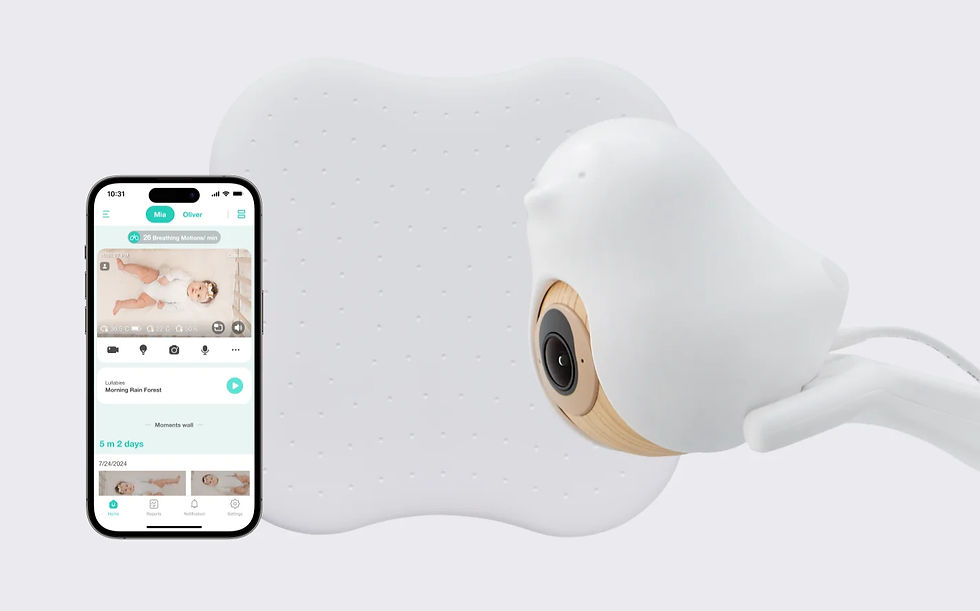
What's included in the bundle:
CuboAi Smart Baby Monitor 3
CuboAi Sleep Sensor Pad
Floor Stand
Mobile Stand
A FREE 1-year trial of CuboAi Care Premium (the upgraded AI insights tier, worth knowing about)
The features that stood out:
Crystal-clear 2.5K QHD video with sharp night vision and auto-zoom on baby's face.
AI Safety Alerts for covered face, rollover, cry, and cough - instant push notifications for the four sleep scenarios that most parents worry about, sent straight to your phone.
Non-contact breathing-motion tracking via the under-mattress Sleep Sensor Pad. It detects baby's micro-movements without anything touching them, no wearables, no clips, no straps, no leads. The pad sits invisibly beneath the mattress and quietly does its job all night.
Smart Sleep Insights - overnight reports that highlight your baby's sleep patterns so you can fine-tune routines based on actual data rather than guesswork. Genuinely useful when you're trying to work out why the 4am wake-up keeps happening.
Quick-set Floor Stand positions the camera at the ideal, cot-wide angle in minutes, no drilling, no fiddly mounting, no rearranging the entire nursery.
The Sleep Sensor Pad works best with mattresses between 6cm and 13cm thick and is paired and managed entirely through the CuboAi app.
Disclaimer: the CuboAi Sleep Sensor Pad is not a medical device and is not intended to diagnose, treat, or cure any condition, including SIDS. It collects breathing-motion data to help you understand your baby's patterns, but it is never a replacement for adult supervision or the safe sleep practices we covered in this guide. Used alongside them, though, it's the kind of layered reassurance that lets exhausted parents actually close their eyes.
Use code 26FIRSTCUBO for extra £15 off any CuboAi Smart Baby Camera, including the Floor Stand Set, Wall Mount Set, and Sleep Safety Bundle. Valid 19 June – 31 July 2026, first 30 uses only. Shop Now!
A Silent, Water-Proof Mattress Protector
The reality of early infancy is that mess is unavoidable. Spit-up, nappy leaks and the occasional night overflow are all part of the experience, regardless of how prepared you are. A reliable mattress protector is therefore one of the most essential, yet often overlooked, items in a nursery.
Soft, silent, and protective, the Panda Kids Bamboo Mattress Protector is the quietly brilliant essential every nursery and toddler room is missing.

Designed for little ones from cot through cot-bed age, this mattress protector shields your child's mattress from spills, bedwetting, sweat, and dust mites - without any of the noisy, plasticky feel you'd expect from a waterproof layer. Made with Panda's signature bamboo blend and patented NanoTPU™ technology, it keeps the sleep surface fresh, dry, and kind to even the most sensitive skin, so bedtime stays peaceful.
Key Features:
Silent NanoTPU™ Waterproof Layer: Ultra-thin, 100% waterproof, and completely silent — no crinkling sounds to disturb light sleepers during the night, and no rubbery feel underneath the sheets.
Bamboo & Cotton Top Layer: A 70% bamboo, 30% cotton blend that's naturally antibacterial, hypoallergenic, and moisture-wicking - ideal for eczema-prone, allergy-prone, or simply sensitive skin.
Thermoregulating Comfort: Bamboo responds intuitively to your child's body temperature, keeping them cool on warm summer nights and cosy in winter to help prevent overheating.
Perfect Snug Fit: Generous 15cm depth with a fully elasticated skirt keeps the protector firmly in place all night long - no bunching, no shifting, no midnight remakes of the bed.
Easy Care & Eco-Friendly: Machine washable up to 50°C, gets softer with every wash, OEKO-TEX® Standard 100 certified, and delivered in recycled, recyclable packaging.
30-Night Risk-Free Trial: Sleep, snuggle, wash, dry and if you don't love it, Panda will collect it for free and refund you in full.
Why Parents Loved it: It quietly does the hardest job in the nursery - protecting your child's mattress, your investment, and your child's sleep hygiene - all without making a sound.
The Panda Kids Bamboo Mattress Protector embodies everything Panda London is known for: bamboo-led products that are kinder to skin, sleep, and the planet, backed by thousands of glowing parent reviews.
A Snug, Safe Swaddle to Calm the Startle Reflex
Newborns have a strong Moro (startle) reflex that can jolt them awake just as they drift off. A well-designed swaddle gives them the secure, contained feeling of the womb without restricting natural movement.
Unlike traditional wrap-style swaddles, the Swaddle UP uses a clever arms-up design that lets your baby self-soothe with their hands near their face - the natural sleeping position research shows most babies actually prefer.

It's a snug zip-up, which means:
No tricky wrapping technique to master at 4am
A double zip for fast, fuss-free nappy changes without fully unwrapping
Breathable, machine-washable cotton
A 1.0 tog rating ideal for rooms between 20–24°C - easy to pair with the right base layer underneath
FTM Tip: Swaddles like this one are designed for the back-sleeping stage. As soon as your baby shows signs of rolling, it's time to transition into an arms-out sleep bag.
A Soothing White Noise Machine
Counterintuitively, complete silence is not always conducive to newborn sleep. The womb is a naturally noisy environment, estimated at around 70–90 decibels of continuous internal sound, including blood flow, digestion and the rhythm of the mother’s heartbeat. In comparison, total quiet can feel unfamiliar and unsettling for some newborns. Consistent, low-level white noise helps recreate this environment while also masking sudden household disturbances such as doorbells, pets, or noise from other children.

Why it works:
Seven soothing sound options - White Noise, Heartbeat, Shushing, Fan, Rain, Ocean, and Nature, so you can find the one your baby responds to.
A rechargeable battery offering up to 48 hours of continuous use, meaning naps in the car, holidays, and weekends at the grandparents are all sorted on one charge.
A built-in adjustable LED night light with three settings, perfect for nappy changes and night feeds without flooding the room with light.
Unlike phone-based white noise apps, you're not draining your battery, getting interrupted by notifications, or worrying about leaving your phone in the nursery. It just does one thing brilliantly.
FTM Tip: Start the sound machine as part of your wind-down routine - not at the moment you put baby down. The cue becomes "this sound = sleep time," which is gold for future settling.
A Smart Nightlight That Also Monitors Room Temperature
A nursery essential that quietly combines two functions in one, offering gentle night-time illumination while monitoring room temperature to help maintain a comfortable sleep environment.
It combines a nightlight with a room thermometer, making it a quietly practical addition to any nursery.

Why parents love it:
It changes colour based on room temperature: blue (under 16°C, too cold), yellow (16–20°C, ideal), orange (20–24°C, getting warm), and red (over 24°C, too hot). One glance from the doorway and you know.
Three adjustable brightness levels for feeds and nappy changes without disturbing baby.
USB powered with a 2-metre cable, no battery panic at 3am.
The colour cues are also designed to align with standard tog-rated sleepwear guidance, helping simplify how you dress your baby for sleep. It removes much of the guesswork, particularly during those late-night moments when you are trying to determine whether the room temperature is suitable for a specific sleep bag tog rating.
FTM UK Tip: Pair the GroEgg2 with a tog chart printed and stuck inside your nursery wardrobe.
Safe Sleep First: The Key Rules
The Lullaby Trust and the NHS in the UK have clear, evidence-based guidelines, and they have been shown to dramatically reduce the risk of Sudden Infant Death Syndrome (SIDS).
Here are the key rules to follow when it comes to safe sleep environment:
Always place baby on their back to sleep, for every nap and every night, until they can roll independently both ways.
Use a firm, flat, waterproof mattress in good condition, with a fitted sheet.
Keep the cot bare. No pillows, no duvets, no cot bumpers, no soft toys for the first 12 months.
Share a room (not a bed) with your baby for at least the first 6 months, ideally up to 12 months.
Keep the room temperature between 16°C and 20°C. Overheating is one of the biggest, and most overlooked, sleep risks.
Smoke-free environment, always.
Feet to foot positioning if you're using a blanket, baby's feet at the foot of the cot, blanket tucked no higher than the shoulders.

Building a Baby Sleep Routine That Actually Works
A "routine" doesn't mean a military schedule. With a newborn, it means predictable cues - a sequence of small, calming actions your baby learns to associate with sleep. The classic formula remains widely recommended: bath, book, bed.
Here's a simple template you can adapt:
Warm bath (not every night - 2 or 3 times a week is plenty for babies).
Massage and pyjamas in soft, dim light.
Final feed in a quiet room.
A short book or lullaby - yes, even for a newborn. They're soaking in your voice.
Into the cot drowsy but awake where possible - this is the long-game skill that pays off hugely later.
Consistency, more than perfection, is what wires those sleep associations in. Same cues, same order, roughly the same time each night.
Common Baby Sleep Challenges (and How to Tackle Them)
Even with an ideal sleep setup, nights do not always go smoothly. These are the most common challenges raised within our community, along with approaches that are often found to be helpful.
Catnapping
If your baby is sleeping for 30–45 minutes and waking up grumpy, they're likely catnapping - finishing one sleep cycle but not bridging into the next. Try:
Lengthening the wind-down before the nap
Using white noise consistently across cycles
Going in to soothe before full wake-up if you can spot the timing
Frequent Night Wakes
Up to a certain age, this is normal and healthy. But if you suspect it's habit rather than need:
Check the room temperature (overheating wakes babies far more than cold)
Make sure daytime feeds are full and unhurried
Keep night feeds boring - dim lights, no chat, straight back into the cot
Early Morning Waking
The dreaded 5am start. Causes can include:
Light creeping into the room (blackout, blackout, blackout)
Going to bed overtired
Hunger
The room cooling too much overnight
Sleep Regressions
The four-month regression is the big one and it's actually a sign of healthy brain development, not a step backwards. Hold your routines steady, expect 2–4 weeks of disruption, and resist the urge to introduce new habits you don't want to keep.
Travel and Disrupted Routines
Take your sleep cues with you. The white noise machine, the swaddle or sleep bag, the wind-down routine - even in an unfamiliar room, these cues tell your baby "this is sleep time." It's why portable, rechargeable kit is worth every penny.
When to Speak to Your Health Visitor or GP
Most baby sleep challenges resolve with time, patience, and a good setup. But always reach out to your health visitor or GP if:
Your baby is unusually difficult to wake
They seem persistently distressed at sleep times beyond the newborn period
You have any concerns about breathing, snoring, or pauses in breath
You're struggling with your own mental health around sleep deprivation, please don't sit with this alone
Final Thoughts: You're Doing Better Than You Think
If you're reading this guide at 2am with one hand while bouncing a baby in the other, please hear this: you are not doing it wrong. Baby sleep is the steepest learning curve of new parenthood, and it doesn't reward perfectionism. It rewards consistency, gentleness, and a willingness to keep trying.
Get the safety basics in place. Build a calm, predictable wind-down. Set up the environment so it works for you, not against you. And surround yourself with the few well-chosen essentials that quietly carry you through.
Better nights are coming. We promise.
Loved this guide? Share it with the new parent in your life who needs to read it and tag us at @firsttimemumsuk on Instagram when you do.
Affiliate Disclosure: This post contains affiliate links. As an Amazon Associate, First Time Mums UK earns from qualifying purchases at no extra cost to you. We only ever recommend products we genuinely believe in and have used, vetted, or had reviewed by our community.


An ice review can provide an opportunity for engineers to consider whether their current knowledge supports their desired career direction. The College of Contract Management offers specialist learning that can help professionals strengthen areas relevant to modern construction projects. Learners can develop additional technical and managerial expertise through structured education. Exploring CCM's programmes can help professionals identify the most suitable route for continued development.
Selecting a level 3 ta course online is a valuable step towards developing teaching assistant knowledge and practical skills. The College of Contract Management offers a professional course with flexible study options.
Leadership roles demand both skill and accountability. Exploring ciob courses indicates chartered membership, reflecting verified capability in project oversight and ethical practice. The College of Contract Management mirrors these competencies in applied courses. Learners gain structured guidance relevant to modern construction challenges. Recognition strengthens professional confidence and operational efficiency.